The Unlikely Pilgrimage of Harold Fry at Theatre Royal Haymarket Review

Photo by Tristram Kenton
Written by Penny for Theatre & Tonic
Disclaimer: Gifted tickets in exchange for an honest review
Last summer a new musical, adapted by Rachel Joyce from her bestselling novel, with an original score from musician Passenger, opened at the intimate Minerva Theatre (part of Chichester Festival Theatre). The Unlikely Pilgrimage of Harold Fry was a big hit with critics and audiences, selling out its Chichester run. Now Harold Fry, along with Mark Addy and Jenna Russell, reprising their roles of Harold and his wife Maureen, transfers to the West End for a limited run. In a venue with three times the capacity of its original performance space, hopes are high that this emotional and life-affirming show will adapt well to its bigger home.
The premise is perhaps a little far-fetched. At home in Devon, Harold Fry receives a letter from Queenie Hennessey, a former colleague he hasn’t seen for twenty years. She’s in a hospice in Berwick-upon-Tweed. He stumblingly writes out a simple reply and goes to post his letter. But something makes him walk past the first postbox, then the second, and then an encounter with a blue-haired assistant in the garage shop inspires him to walk the 600 from his home in Devon to visit Queenie and make amends for their parting twenty years ago. The fact that time is of the essence if you need to visit somebody in a hospice (so driving rather than walking would be a good idea) is briefly touched upon, but it’s best not to dwell too much on that. This story is about the journey as much as it’s about the destination.
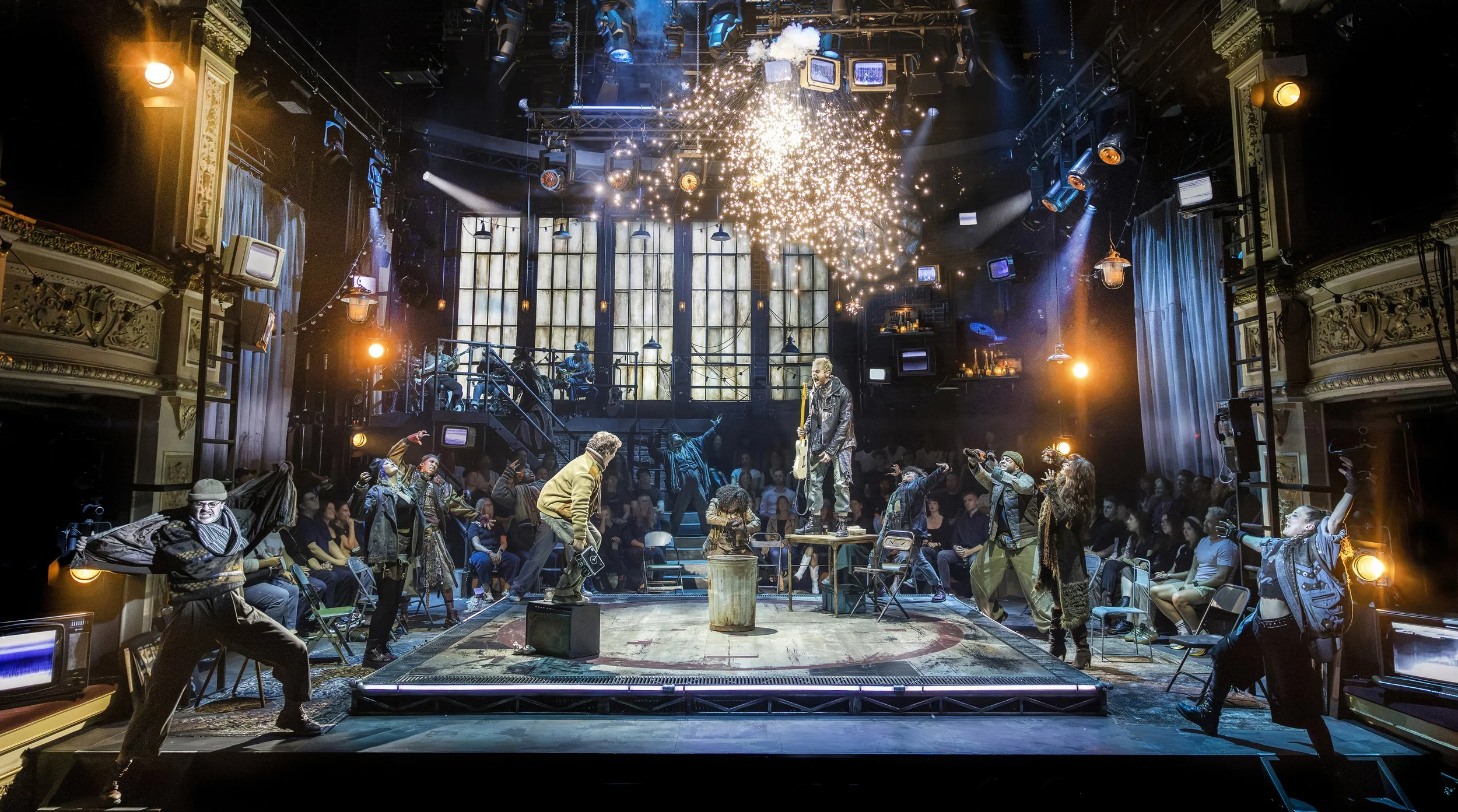
The design (Samuel Wyer) is spectacular. Initially, the stage is pretty bare with a few scattered barrels and a clear circle marking out the main performance space. Once the show begins, this space is transformed to represent the English landscape largely through video projection (Ash J Woodward), and we are taken to locations from Harold’s modest home to a souvenir shop to a station café through the addition of furniture that ranges from a simple table and chairs to a detailed shop display of dreamcatchers and crystals. As the action unfolds, Harold’s physical and personal journey is mirrored with stunning lighting effects with vivid colours from Paule Constable that take us from a tranquil summer’s day to a stormy and turbulent night. As Harold’s journey progresses and he reaches into his memory, flashback scenes are clearly defined with a dramatic burst of sound (designed by Gareth Tucker for Autograph) that allows us to move seamlessly from present to past and back again.
This creative and rich design is perfectly mirrored by the ensemble cast. With direction from Katy Rudd, who also worked with Joyce and Peter Darling on the adaptation, and choreography from Tom Jackson Greaves, the actors rarely leave the stage, moving around the space to pass props to Harold and Maureen, setting scenery and taking on cameo roles, each with their own story to share, as well as playing everything from sheep to the (dancing!) brushes in a car wash. They also add to the sense of Harold’s enormous task. With lyrical movement reflecting the elements, they are the wind blowing washing and then in a heartbeat, the clothes appear to transform into a character with some beautiful puppetry work.

Although Joyce has given us a fairly faithful adaptation of her novel, the tone is very different in the show’s two acts. As Harold’s story and journey is established, the mood is largely light-hearted with only a hint of darker themes. He is presented as a fairly passive character, his wife Maureen a bit of a stereotype of the nagging spouse. The emphasis is very much on the colourful characters he meets on the road – most of them offering a musical number to tell their stories. And Passenger’s music is the perfect accompaniment to the story. It has a strong folk influence but there’s also a showstopping gospel number (with aforementioned dancing carwash!), a good old fashioned musical theatre song and dance number (that brings the house down with its camp joy!) and, for the sublime Jenna Russell, a plaintive lament about her isolation and loneliness, a masterclass in acting through song.
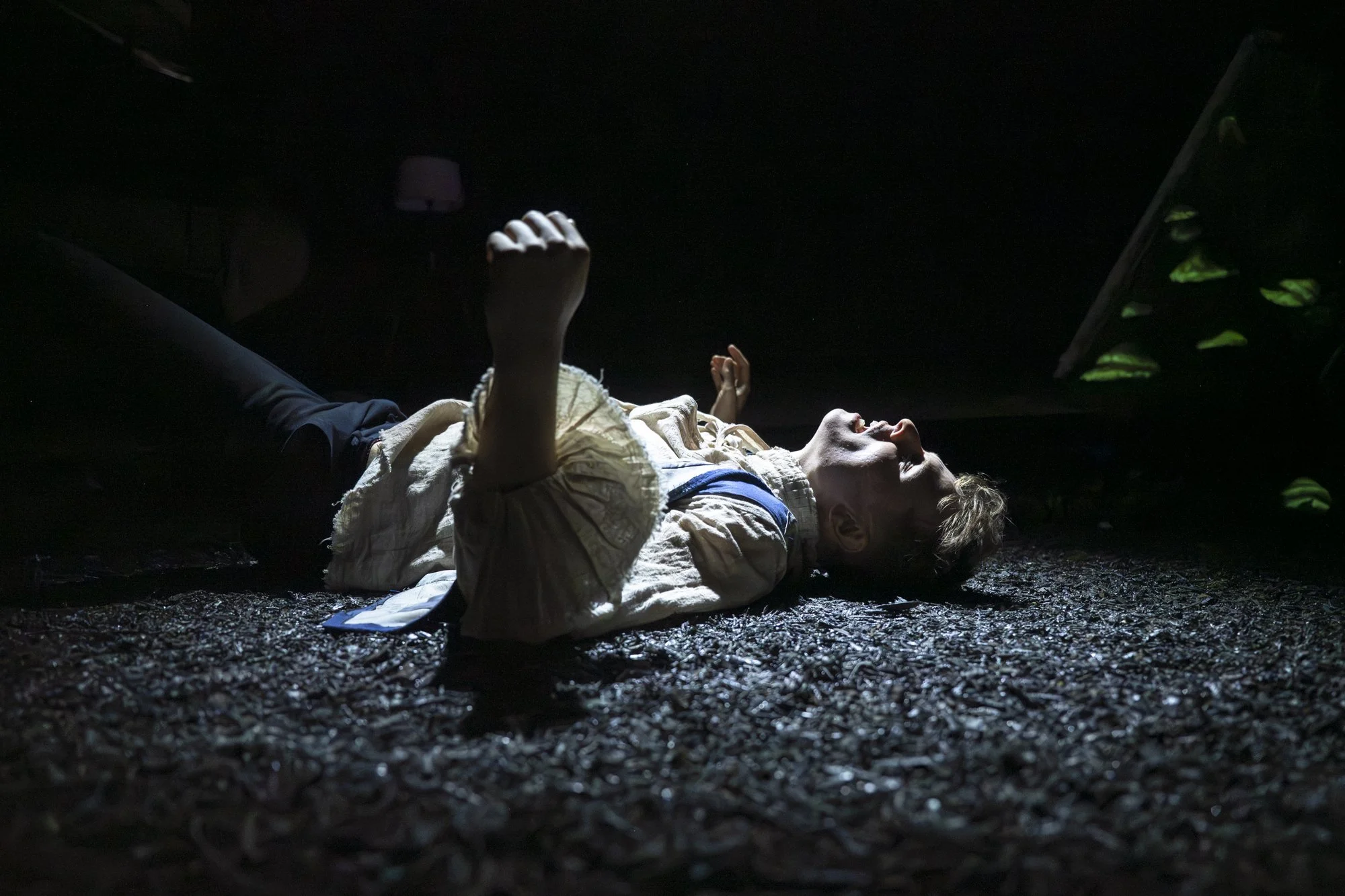
The second act takes a much more dramatic turn. An eccentric group of “pilgrims” who have joined Harold on his journey take on a more sinister form as the mood becomes tense and Harold’s memories become more nightmarish and overwhelming. As the show reaches its climax, the full story is revealed and, although emotions run high, the treatment never feels manipulative or sensationalised. Harold and Maureen’s reactions are totally in keeping with their characters and all the more impactful for it.
The performances from the ensemble cast are excellent. Playing multiple roles, they create distinct and recognisable characters. Personal highlights were Madeleine Worrall’s straight-talking Slovakian Doctor turned immigrant cleaner Martina – masking her personal pain behind a hilarious and expletive-ridden song, and Jenna Boyd’s wonderful Sister Philomena, a calm presence amongst the rest of the quirky company, delivering an absolutely stunning and emotional performance in the show’s stand-out song, “Keep on Walking, Mr Fry”.
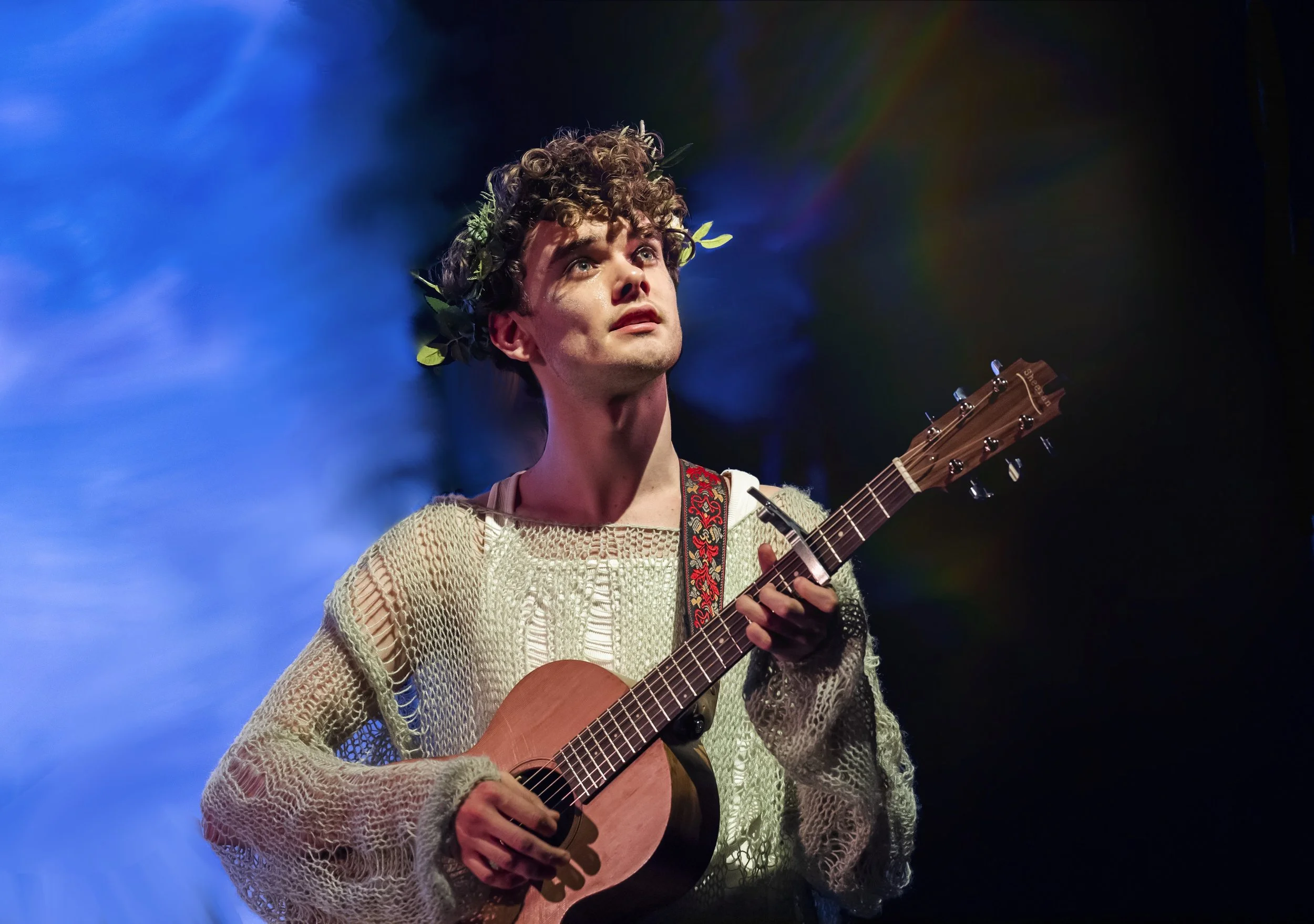
The character of the Balladeer is present throughout the show. Dressed in casual, rustic clothes, he wouldn’t be out of place in the Healing Fields at Glastonbury, a sprite or a minstrel guiding us through the story, Harold’s constant shadow. Noah Mullins, in their West End debut, has a charismatic and engaging presence, moves beautifully and offers powerful vocals with a gorgeous tone. At times, I couldn’t quite make out every word they were singing, but this was a minor distraction.
Reprising their roles from Chichester, Mark Addy and Jenna Russell are perfectly cast. Addy’s journey from rather taciturn retiree to social media sensation and inspirational figure of almost religious proportions is beautifully done. He shows the physical and mental toll of his journey with exquisite subtlety. Jenna Russell may be left at home but her journey is just as powerful – heartbreaking in her isolation and slowly learning to come to terms with her past. Her solo songs are delivered with a stillness that manages to speak volumes, drawing us into her personal story and giving so much emotion and depth that she’s mesmerising to watch.
Typically, for all these wonderful performances, the star of the show is, of course, a puppet! Dog, expertly controlled by Timo Tatzber, captures every heart, with joyful barking at the idea of chasing a stick bringing smiles and laughter and a mournful whimper inspiring audible moans of sympathy from an audience entirely convinced he’s real. I wish Dog’s story had played out as it did in the original novel, but will not say more for fear of spoilers. Again, a minor point.
This is undoubtedly an outstanding production of a beautifully written show. The capacity of the Theatre Royal means that some of the intimacy of its original staging is a little lost. The impact of the big showbiz numbers, as well as some of the soul-searching solos, feels diminished due to distance from the stage and a few sight-line obstructions. But it still packs an emotional punch with staging and performances that will stay with you long after you’ve made your own journey home.
The Unlikely Pilgrimage of Harold Fry runs at the Theatre Royal Haymarket until 18th April 2026. Find out more and book tickets here.
★★★★