The Whiteheaded Boy at Abbey Theatre, Dublin Review
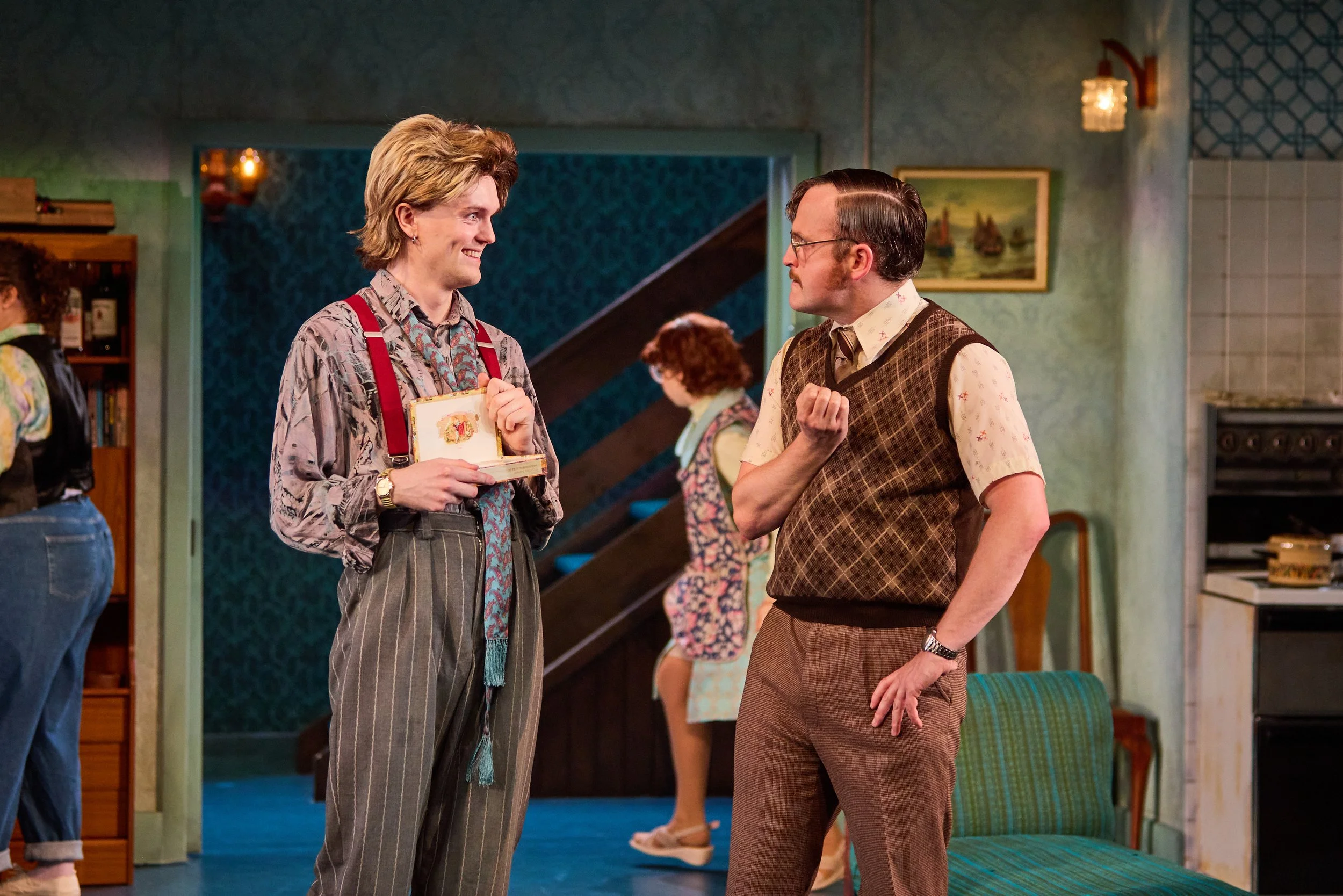
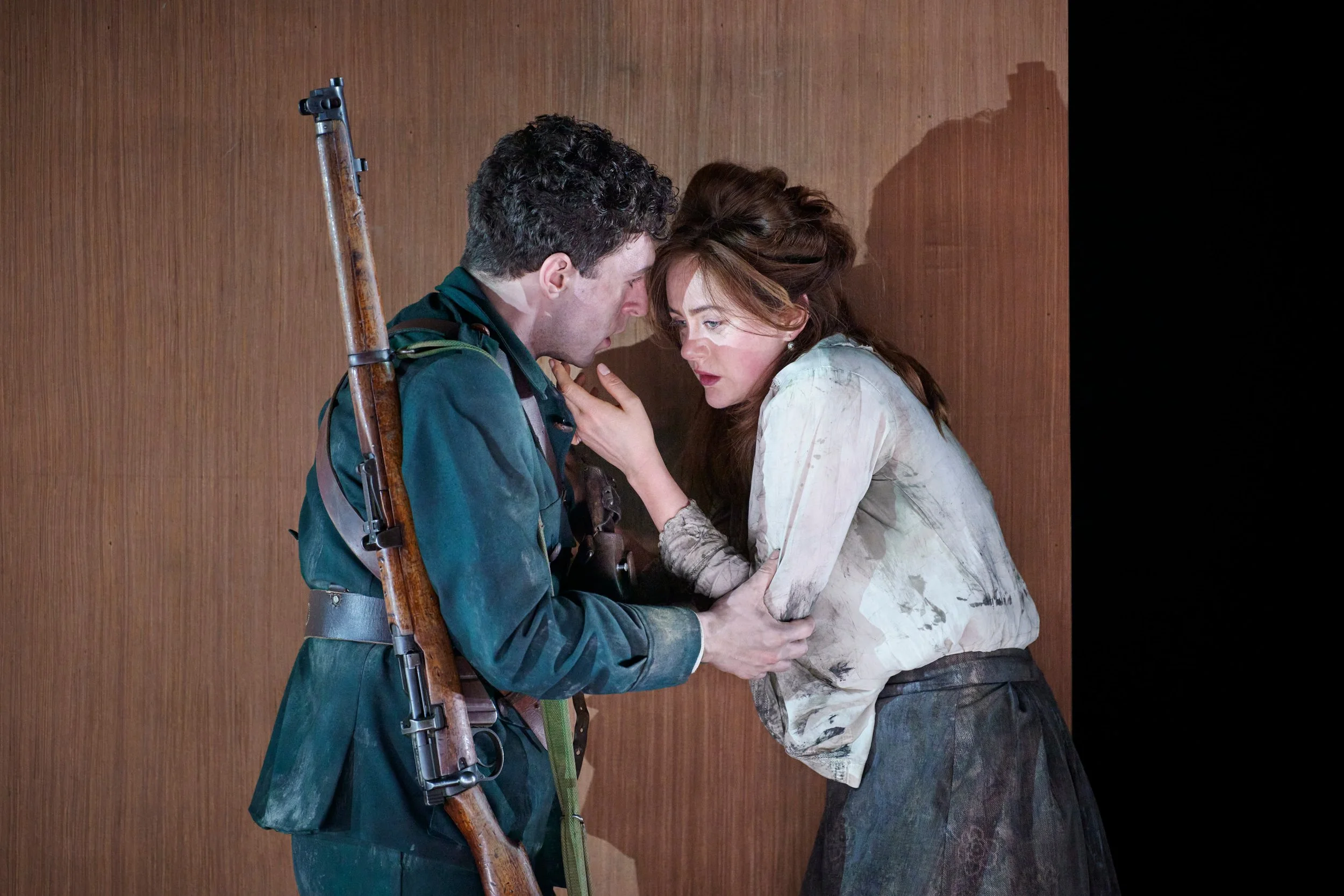
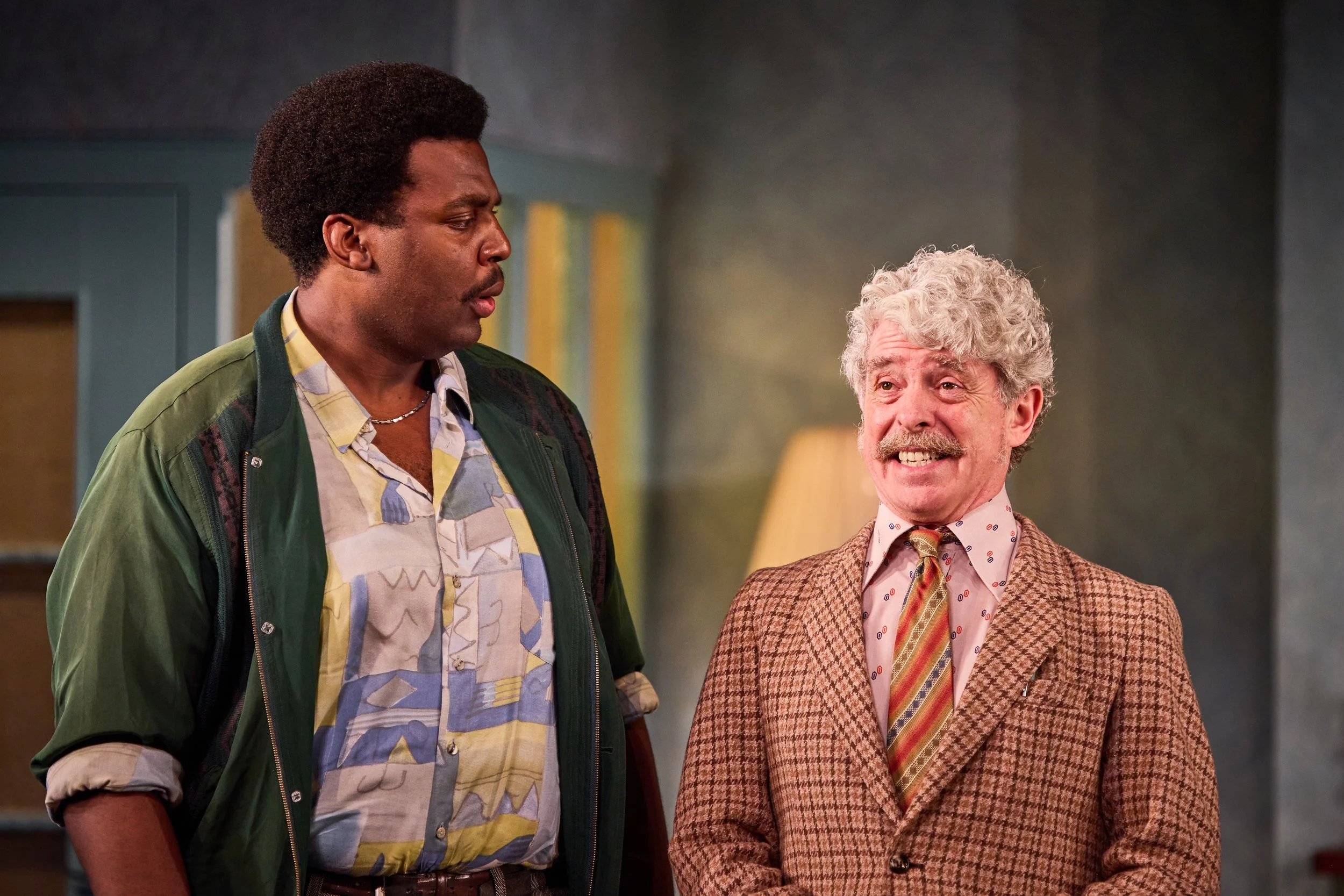
Teddy Moore and Peter McGann in The Whiteheaded Boy. Image by Patricio Cassinoni.
Written by Ciaran for Theatre and Tonic
Disclaimer: Gifted tickets in exchange for an honest review. All views are our own
Theatres like the Abbey, with an explicit public mandate (“to effectively and imaginatively engage with all of Irish society through the production of ambitious, courageous theatre in all its forms,” no less) alongside significant government funding, are in a curious situation when summer comes. Balancing the need for seriousness and attention to issues of public debate with the fact that brighter evenings, warmer days, and the prospect or memory of holidays means that people aren’t as keen to spend a night watching trauma unfold in front of them can be tricky. Last year they went with Kevin Barry’s The Cave, and while it had some merit, it couldn’t get over the fact that Barry’s genius lies in dialogue, not narrative, and so it folded in on itself towards the end. This time, director Annie Ryan dusted off Lennox Robinson’s The Whiteheaded Boy from the archive for the first time in over 50 years, and has produced a triumph – not a flawless one, but a brilliantly pitched, creative, and overwhelmingly fun night out.
The play is old, dated from 1916, but Ryan has updated it – somewhat; the action is set loosely in the late 70s or early 80s, with hair, clothes, music and décor doing the work for us, but leaving the precise year ambiguous. The setting is the Geoghegan household in small town Ireland; not rural, but also very much not Dublin, regarded by some members of the family as an almost mythical place, and by all of them as a culturally distinct one. The head of the family goes without a first name, and is played by Clare Barrett as little short of a nightmare – fawning over her apparently brilliant son Dennis, due home from university in Dublin, she neglects, demeans, or disregards her five other children. As she summarily dismisses their concerns in favour of her beloved youngest, comedic tension builds, and is fulfilled with aplomb by Teddy Moore in the titular role. After Dennis’s arrival, and the revelation that he has once again failed his exams and so won’t become a doctor, we watch half of the family plot, scheme, and deal their way to avoiding public humiliation – a desperately tragic fate, which must be avoided at all costs, in both this play and much of the world that it parodies. The other half, meanwhile, simply want to be able to live their lives, and finally stop sacrificing all for Dennis. The result is a joyous farce that never hides its predictability, enjoys the social satire that it heightens and refracts, and makes space for each actor to get their own laughs.
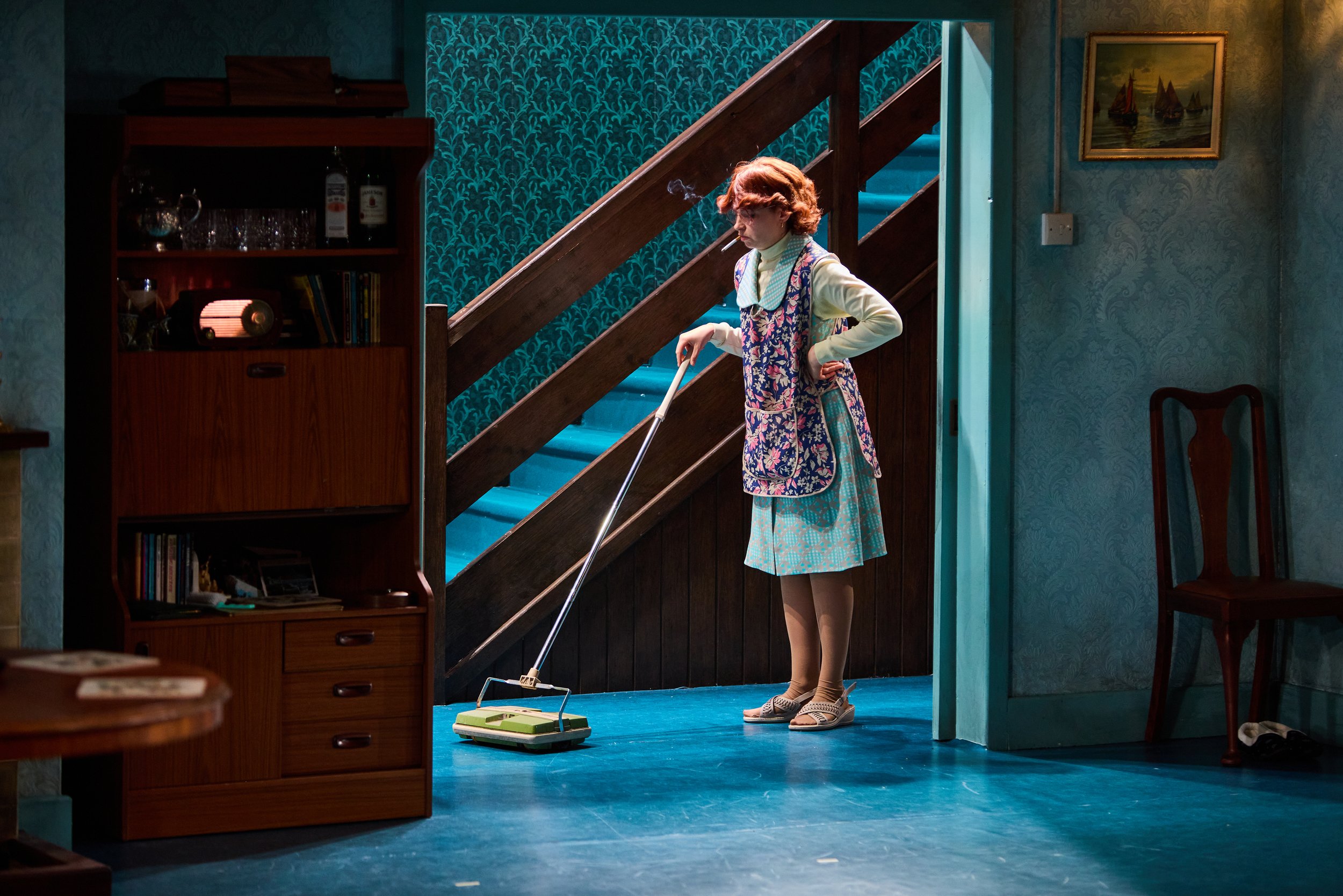
The curtain is up as you enter the theatre, with Kate (Genevieve Hulme-Beaman) pottering around in her apron, cleaning and fixing the place. The music gives us a hint of when we should be; Kate Bush, Joy Division, David Bowie. Like all of the cast, her movements are deliberate, strong, and faintly absurd, her hair is perfect for the time, and when she is joined by the rest of the family, the most notable thing is the explosion of colours – from the walls to the carpets to the costumes, there are sharp, shocking blues, pinks, and yellows, which contrast delightfully with deep browns, greens, and mustards. Set and Costume Designers Maree Kearns and Sinéad Cuthbert, respectively, have done a wonderful job in not only building this world, but also making instantly arresting and engaging; if nothing else, you’re curious about what is happening to your eyes with this cavalcade of colours being hurled at you. Aside from this, though, the set itself allows for kinetic, vital performances – the stairway through a door upstage has 3 entrances, so any time a character isn’t in the main living room there’s every chance they’re scurrying or hustling somewhere else. This also perfectly communicates the reality of growing up in a house with 6 codependent siblings and an overbearing mother; no matter what’s happening in one room, you can be pretty certain that there are more exciting, possibly illicit, things going on elsewhere.
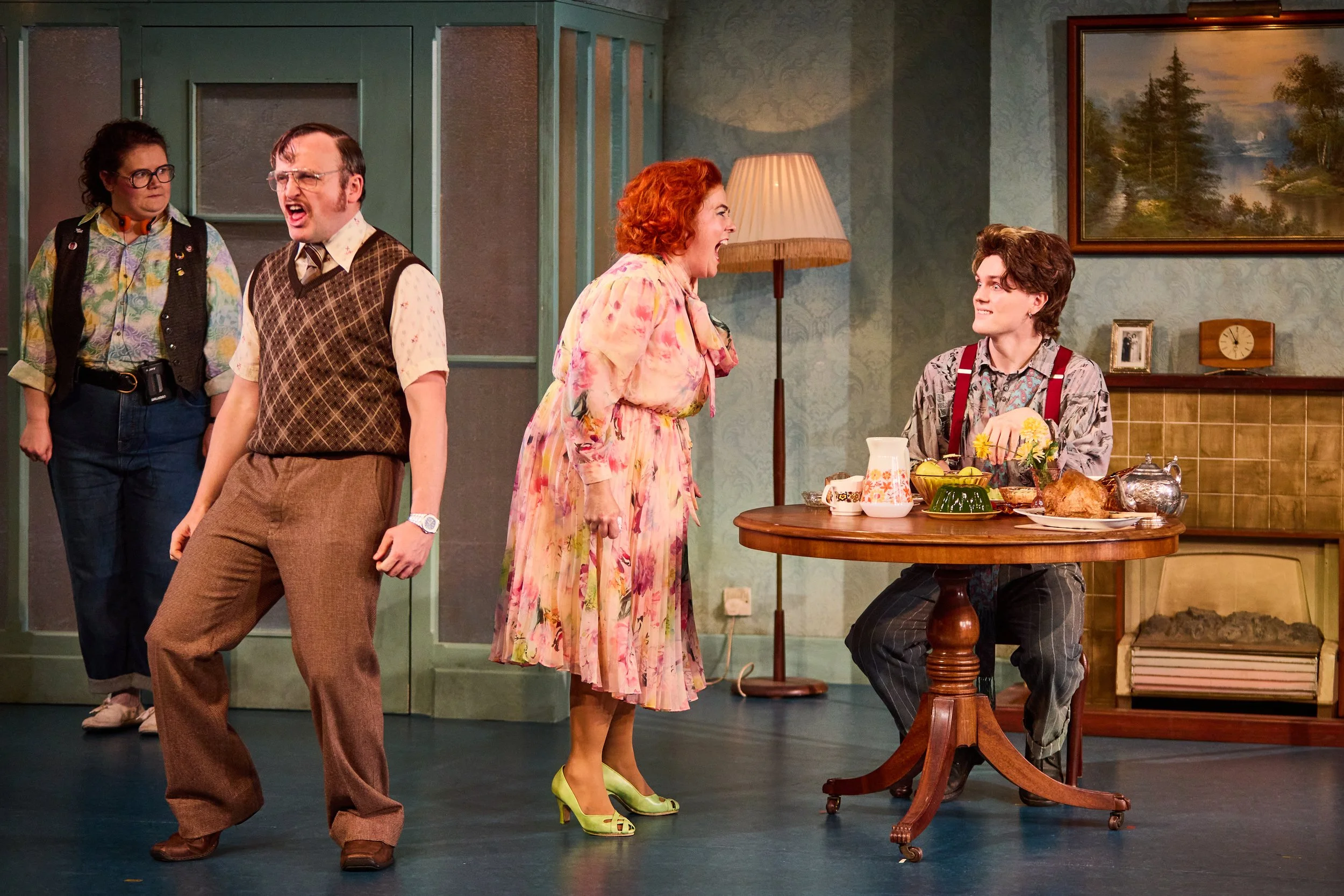
Moore as Dennis, with black boots, obnoxiously baggy trousers, suspenders, and a silk tie knotted near their belly button is the star, with their face semi-permanently fixed in a rictus of joy or dismay; they are all cheeks, eyes, and eyebrows, a doll whose face can only do smiling or sulking. The performance’s queer coding is about as subtle as a freight train, but this is clearly deliberate and they have wonderful fun with creating ambiguities in the dialogue – words like “service” and “submit” are winked more than spoken, and the constant, yet never addressed, question of how much interest Dennis really has in his sweetheart Delia plays with our own assumptions around dress, behaviour, and sexuality.
While Moore is an overwhelming presence, the rest of the cast have their moments – Peter McGann is straitlaced and restrained, with a dreadful combover, as the responsible son George, while Ben Waddell as the almost-invisible Peter perfects the art of making nearly every utterance both monosyllabic and humorous. Hulme-Brennan as Kate is wonderful, opening and concluding the play, with some physical comedy that was a tad overplayed. Her strongest points, though, were the moments when the play was happening around her, with deals and dialogue and money changing hands, while nobody else could see her – her portrayal of the old maid at 36 is subtle, with small expressions showing her feelings and reminding the world that she, too, is a human being. Baby (Charlotte Clear) and Jane (Fionnuala Gygax) complete the family, with both putting in strong performances and getting strong laughs from the audience.
While this was clearly an old work refashioned for amusing light entertainment, it was hard not to admire the sharp satire and edge at the core of this work, and its relevance for today. With a housing crisis gripping Ireland, many people are in the position of the Geoghegans, living at home and putting off life decisions until they are more financially secure. The threat that hangs over Dennis, meanwhile, is one that has haunted Ireland in waves for centuries – when it is revealed that he won’t be returning to university, George decides that he will be sent to Canada; played for laughs, this has been the de facto position of generations of Irish people, with only the destination ever changing. The inevitability of family dynamics is an eternal theme in theatre, and so much of this is on show, with siblings automatically falling into old roles and habits, without thinking that they may not be required, or even useful.
Annie Ryan is a brilliantly creative and engaging director who does things on the Dublin stage that few others have the ability, resources, or reputation to try. With The Whiteheaded Boy, she has revived a work that could easily have never been seen in Dublin again, and crafted a joyful farce to be enjoyed on multiple levels, and deserves a great deal of credit for employing such a brilliant creative team and cast.
The Whiteheaded Boy runs at the Abbey Theatre, Dublin until 25th July.
★★★★