The Last Man at Southwark Playhouse (Elephant) Review
Written by Ziwen for Theatre and Tonic
Disclaimer: Gifted tickets in exchange for an honest review. All views are our own
I sometimes wonder whether there is a kind of one-person show that can establish a convincing premise without having the actor directly narrate to or communicate with the audience—one that simply presents a character’s state of being, yet still manages to hold our attention completely. The Korean musical The Last Man, written and with lyrics by Jishik Kim, composed by Seungyeon Kwon, and directed by Daljung Kim, attempts something along those lines. After productions in both Korea and China, it has now received an English-language version in London. While the show still has its flaws, it also contains many genuinely affecting moments.
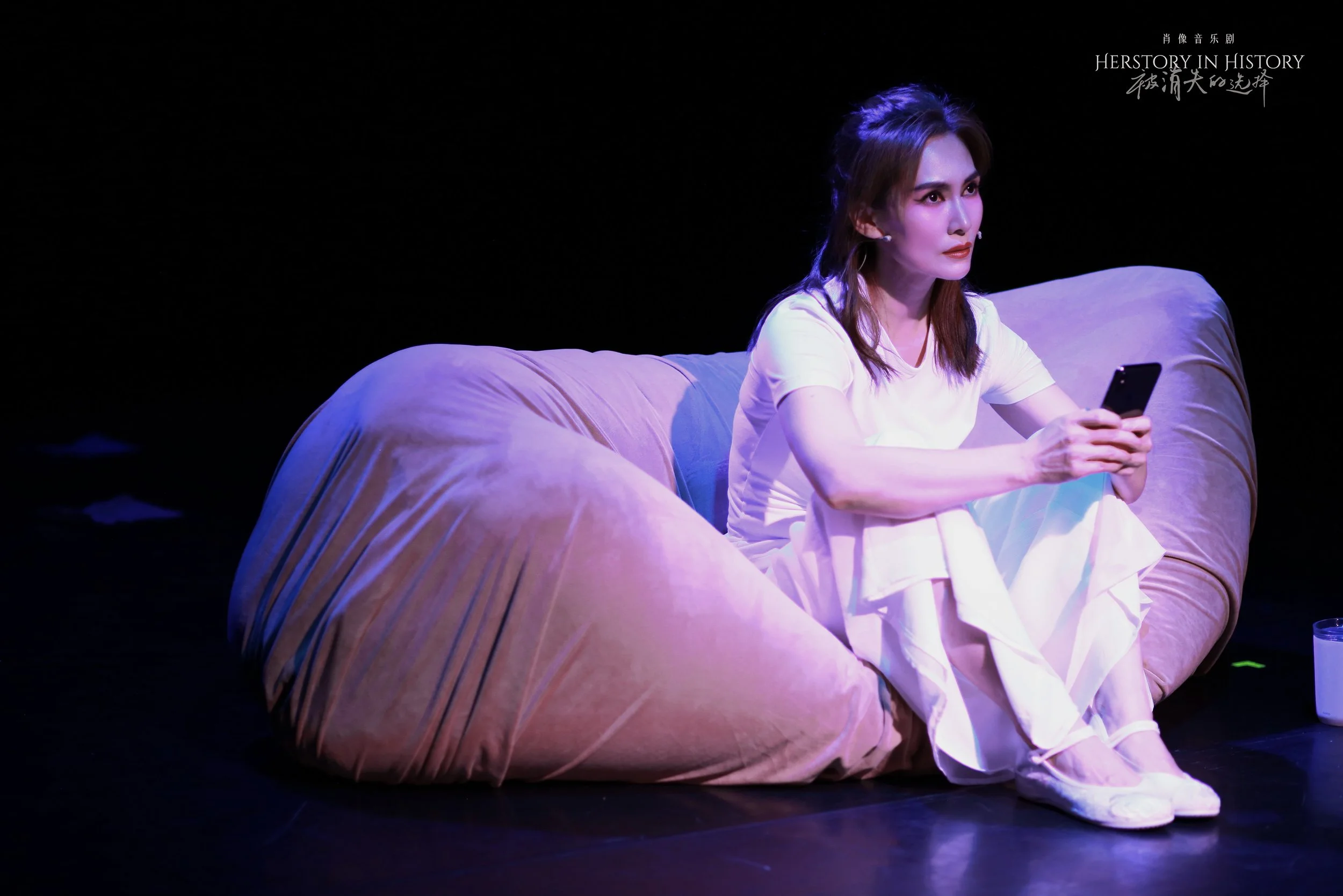
The story appears to begin after a zombie virus outbreak has thrown the world into chaos. A survivor has locked themselves inside “B-103,” an underground shelter in Seoul. They believe they may be the last living person left in the world. Determined to survive for as long as possible, they begin recording video diaries on their phone, hoping that someone, someday, might see them. They carefully ration their daily food intake, grow potatoes and air-purifying plants, and one day miraculously rediscover a teddy bear from childhood. But just as they begin to believe they can keep going, disaster after disaster follows: power outages, water shortages, flooding. As their mental state edges closer to collapse, they begin to wonder whether they should finally step outside the door. At the same time, the audience gradually senses that too many things do not quite add up, and that the survivor may already have descended into a kind of madness. And has the world truly ended at all?
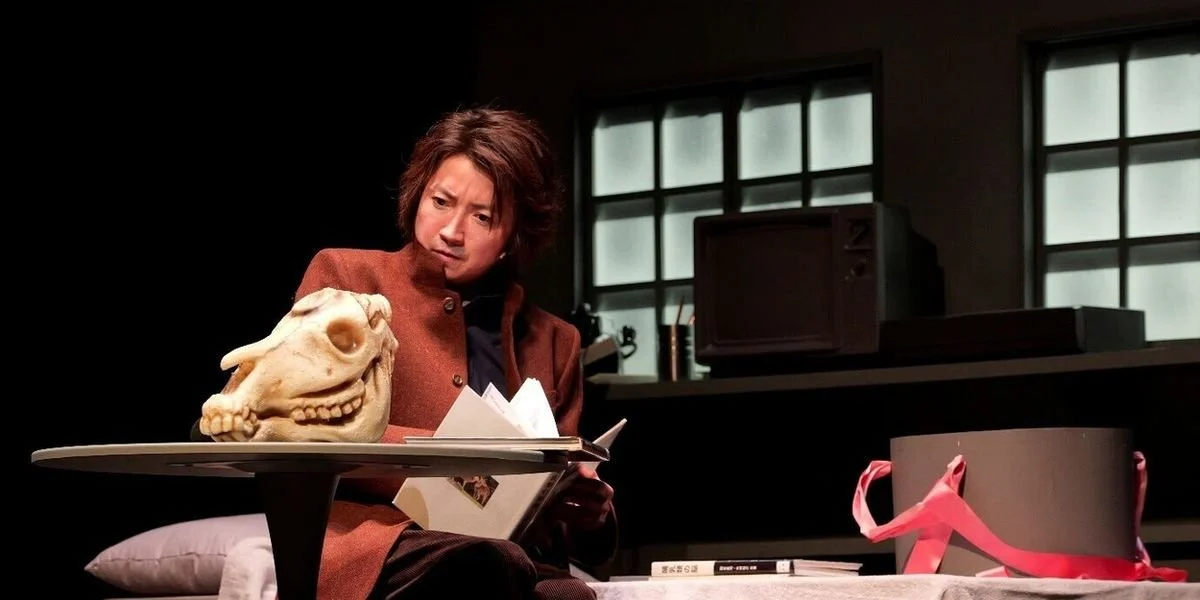
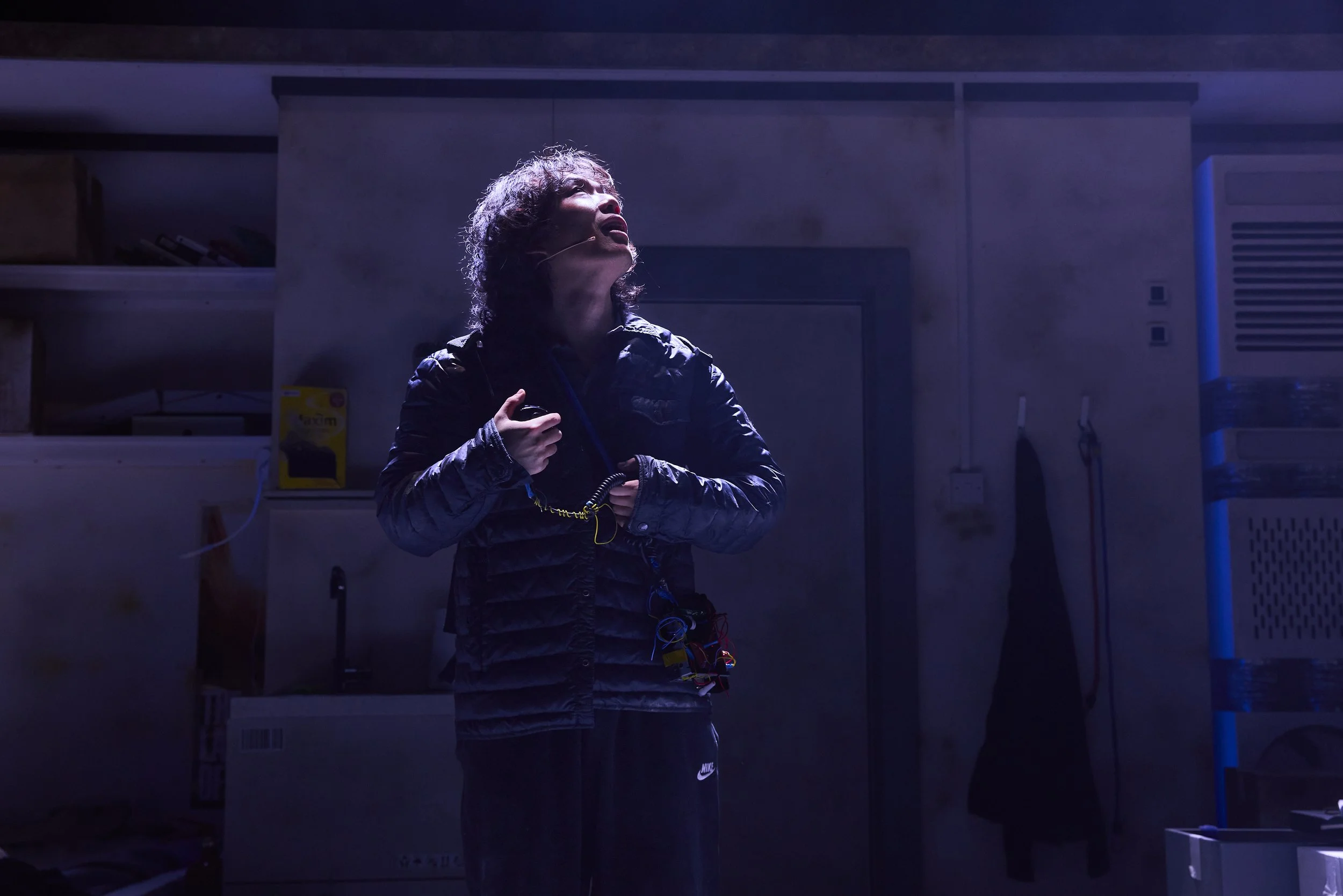
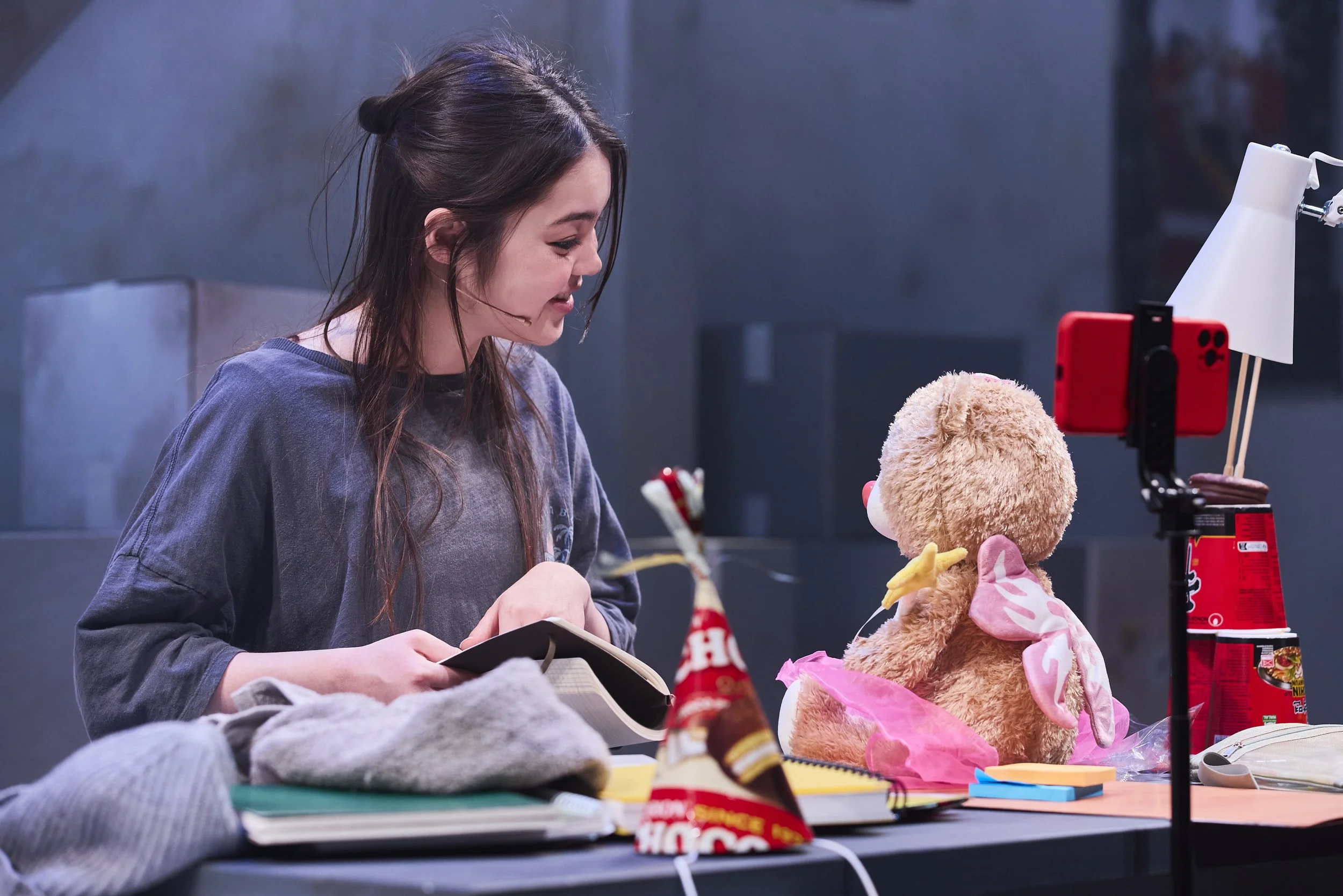
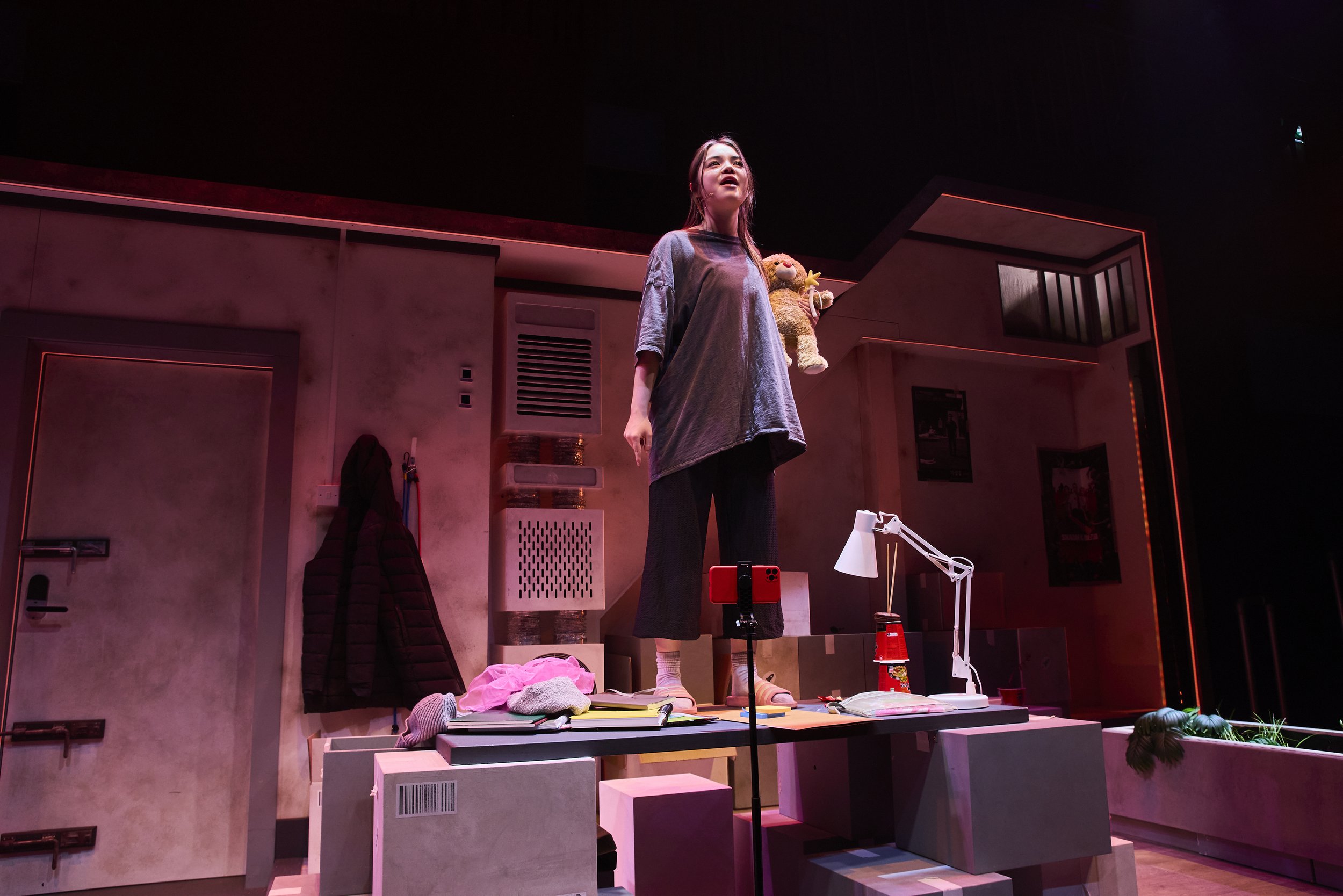
The production design (Shankho Chaudhuri) is filled with details that deepen the show’s sense of realism. Mountains of cardboard boxes, air purifiers, stacks of drinks, plants sprouting from instant noodle cups repurposed as flowerpots, a birthday hat made from a Choco Pie box, and posters of Train to Busan and Parasite pasted on the walls all subtly reflect the story’s themes. Meanwhile, the flashes of green and red light leaking through the cracks of the door, designed by Cheolmin Cho, heighten the atmosphere of unease every time they appear.
Although the musical does not contain a large number of songs, and the band occasionally overpowers the vocals, the score of The Last Man is undeniably catchy. One can sense that the translated version differs considerably from the original Korean lyrics—for example, in “That’s Jeong,” a significant portion of the song is dedicated to explaining the meaning of the Korean concept of “jeong.” Yet the translation never feels awkward or forced. In fact, it succeeds in achieving what a good musical translation should aim for: making the songs feel as though they were written in English from the very beginning. Several songs, including this one, carry a quiet tenderness, evoking a loneliness that feels somehow not too cold.
At first glance, the show seems to be about surviving the apocalypse, but in reality it is about loneliness in modern society, feelings of failure, and the condition of living after losing connection with other people. By the end, the audience realizes that the zombies may simply be an excuse the protagonist has created to avoid stepping outside. The protagonist is intentionally left without a fixed gender, age, or identity. In the Southwark Playhouse production, the survivor is alternately performed by Nabi Brown and Lex Lee—one version portraying a student, the other someone already navigating adult working life. In the performance I attended, the role was played by Brown. Although some emotional beats occasionally felt repetitive, there was still an undeniable sincerity to the performance, along with impressive emotional intensity. And the small moments of humour that naturally surfaced amid despair made the character feel endearing. Afterwards, I looked further into the Korean productions and found that, much like the English version, they feature multiple survivors, each paired with a completely different stuffed toy. Their exits from the stage also vary slightly, encouraging the audience to speculate about the kind of ending each character meets. This is an especially compelling creative choice, one that gives actors greater freedom to shape their own interpretations of the role. If their dialogue also differed between versions, it would become even more intriguing.
Still, despite the strength of its central concept, there remains much more the musical could explore. For most of the show, the protagonist simply appears to be struggling to survive in a zombie apocalypse while gradually losing their sanity. As a result, the twist near the end lacks sufficient groundwork and ends up feeling somewhat abrupt rather than layered and complex. Whether the protagonist is losing their mind because they are trapped in a zombie-ravaged world, or whether the zombie world itself is a product of psychological instability, the story urgently needs more detail and background. I could clearly feel my attention sharpen whenever the protagonist began singing about fragments of childhood memories. If they are not truly trapped by zombies, but by social failure, shame, and fear, then the experiences that led them here—whether they were bullied, what their relationship with their parents was like, whether they once had friends—become crucial. Once those elements are revealed, the audience would begin to ask themselves, “Has the outside world really been destroyed?”
The decision to tell this story as a solo performance is remarkably precise; there may be no theatrical form better suited to expressing loneliness so directly. The use of phone recordings is also effective, suggesting that somewhere deep down, the protagonist still longs for human connection. The Last Man, in its current form, still contains gaps waiting to be filled, but even with its imperfections, the sincerity at its core remains moving. I believe that, in time, audiences will come to understand this survivor even more fully.
The Last Man runs at Southwark Playhouse Elephant until 13th June 2026.
★ ★ ★